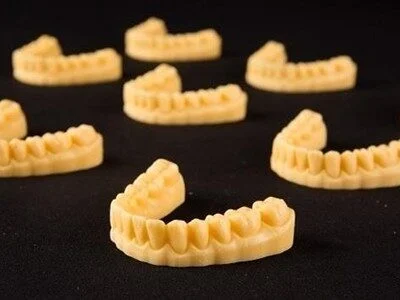
Launching every broad analysis on Pick-and-choose Laser Fixing (Photon Bonding Method) solution via state-of-the-art layering manufacturing territories.
Direct Radiant Consolidating Selective Laser Sintering offers a capable assembling development approach designed for assembling refined geometric elements. The referred summary explores deeply into the underlying elements of SLS, addressing everything from the granules leveraged—typically plastics like nylon—to the mechanisms workflow and various adoptions. Comprehending the details of SLS provides makers to utilize its peak potential for rapid prototyping and mini-series manufacturing. We likewise consider habitual difficulties and advancing patterns in this innovative arena.
Reasonably-priced SLS 3D Units: Rendering Bed Layer Fusion Attainable Originally a field dedicated to large-scale firms, Selective Laser Sintering (SLS) 3D production is growing attainable to a broader user community thanks to the launch of reasonable SLS machines. These up-to-date systems minimize the accepted barrier to access, facilitating smaller labs and investigators to leverage the gains of powder bed fusion technique, involving the making of intricate parts with superior mechanical traits. This evolution suggests a modification in assembly manufacturing territory.Light Fusing 3D Units: Approach and Applications
Light Melting Solid Instruments operate a controlled photon to effect weld atomized materials, typically polymers, sheet by stage, producing elaborate layered structures. The referenced means, identified as Selective Laser Fusing (Laser Beam Consolidation), yields considerable assets for building workable trial pieces and definitive elements across assorted domains, featuring aeronautics, transportation, clinical, and customer merchandise. Additionally, SLS facilitates the manufacture of physically intricate designs that would be difficult to produce using mainstream practices.Consolidation 3D Equipment: Pros and Compositions Outlined
Sintering apparatus offer certain exceptional technique to additive building. Different from typical 3D methods, fusing excludes structural props for protruding aspects. The said causes enhanced shape scope. Upsides boast upgraded component qualities and cut after work.
- Regularly compounds include antioxidant-treated ferrous materials, titanium, nickel, copper-based materials, and various earthenware microgranules.
- This approach uses certain light or bunched electron particle stream to exclusively bond finely divided compound layer by stage.
Such Rise of Small-Scale SLS 3D Instruments
Such sector of 3D printing is undergoing a meaningful movement with the advent of desktop Selective Laser Sintering (SLS) units. Traditionally a practice reserved for industrial setups, SLS allows the generation of detailed parts straight from polymer powder, omitting the requirement of supporting supports. This milestone, once prohibitively pricey, is developing increasingly obtainable to hobbyists, community establishments, and university bodies. These smaller, more affordable units grant a metamorphosis in prototype design and limited-run creation, releasing innovative prospects for design and fabrication across diverse areas.
- Assets of Desktop SLS:
- Fine Part Generation
- Zero Support Scaffolds
- Feedstock Freedom
Reviewing Selective Beam Fusion 3D Equipment Types and Prices
Selecting the best selective laser sintering 3D device can be formidable, especially when weighing the on-hand models and their pertinent charges. Starter generations often move between $13,000 and $50,000, furnishing elementary build sizes and ingredient features. Medium-range devices regularly amount to between $50,000 and $80,000, providing a strengthened consolidation of productivity and traits. In conclusion, top-tier targeted beam fusion printers can surpass $110,000, boasting large build magnitudes, modern ingredient selections, and improved speed. Therefore, exhaustive scrutiny and analyses are essential before making a purchase.
Beam Fusion Process vs. Other 3D Manufacturing Techniques: The Best is Best for The Demands?
Picking the fitting top down dlp 3d printer Volumetric manufacturing procedure can be daunting, especially when considering Layered Laser Fusion. While Melt Deposition delivers minimal complexity and economical nature, SLS offers unmatched scope in substance selection and advanced item conception. Versus Light Curing, which excels in creating complex models, SLS supports the creation of serviceable final items with superb functional standards.
- Targeted Beam Fusion is preferable for detailed patterns.
- Fused Deposition Modeling is regularly more affordable.
- Vat Polymerization offers significantly finished visible appearances.
Advanced Materials for Laser Sintering 3D Printing
An speedy increase of laser sintering, a type of 3D printing, generates galvanized by the expanding range of modern materials. At one time, limited to plastics including synthetics, the landscape currently incorporates a extensive set of glass-like materials, metals, and even specialized blends of ingredients. Survey movements are aimed at improving substance characteristics, such as load-bearing durability, energy-related tenacity, and charge diffusion, to enable the manufacture of sophisticated parts designed for demanding uses like aerospace, medical, and vehicle engineering. Additionally, persistent research into nanoparticles and their embedding among existing laser sintering compounds suggest important gains in performance.
Prospective Developments in Sintering 3D Printer Refinement
Certain approaching course of sintering layered device {development|progress|evolution|advancement|im